
Two weeks ago, I spoke at Black Hat MEA 2025, held in Riyadh, Saudi Arabia. A week later, I spoke at the Cyber Marketing Society’s Cyber Marketing Conference.
Black Hat is always known for strong content, but having just been exposed to field marketing and having made a few friends in that world, what stuck with me most was how different the MEA experience felt compared to US-based Black Hat events.
This blog captures a few of those observations. Whether you’re a speaker, traveler, or marketer planning future conference participation, I hope you find it useful.
I generally loathe trade show booths. The carnival barking, the landfill-bound swag, the decisions to staff booths with junior personnel. Many of my social media selfies have me sporting bulky over-the-ear headphones, specifically to signal others not to talk to me.
I don’t want your branded highlighters, keychains, bottle openers, coffee mugs, wireless chargers. Fun-size candy bars are not enough to bait me into enemy territory. Leading with a badge scanner is cute, and also why I often register for US conferences with a throwaway email address. All of this learned behavior is due to my USA-centric conference experience.
Black Hat MEA flipped this model entirely.
The booths were over the top, exciting, and welcoming. Nearly every wall, ceiling, and in some cases even the floor was digital. Anything that could sport an LED did. In theory, it should have been overwhelming. Somehow, it wasn’t. Most of the animation lived quietly in the background, like Matrix-style character rain rather than attention-grabbing sales loops.
Where US booths often feel like “take your swag as I scan your badge and GTFO”, MEA booths were built around hospitality. Tables and chairs, couches, or bean bag chairs. Nearly all of them had white glove coffee service (no fingerprints on those silver coffee kettles). The focus was on personal attention and connection.
Some booths had (absurdly small) screens to demo a product. Maybe a few had paper slick sheets on public display. But by far and large, the focus was on being welcoming and getting to know each visitor. There was limited badge scanning and almost no landfill-bound stuff.
While this meant I did not get to truly enter every booth on the showroom floor, those I did enter were extremely hospitable and accommodating.
Think this through for a moment. You’ve invested in an exhibition booth. The show gives you only so many staff badges. Who do you send?
From my experience with USA-style booths, I generally find entry-level staff, often from the marketing department, maybe one or two techies to function as someone authorized to answer a question or go off script. The focus often feels like “get ‘em in quick, get ‘em out quick”, with ROI calculated later through post-show follow-up. Senior staffers, meanwhile, are typically off-site holding court privately.
MEA-style booths? I’m not great with words, but whatever the opposite of that is, was my experience.
Based on conversations and business cards I picked up, booths appeared to be staffed primarily by senior leadership, even at very large companies. Many booths were built with second floor, semi-private meeting spaces. Part of this could be cultural. Some may be geographic. The convention center is a one-hour drive north, surrounded by desert on all sides, which is not conducive to offsite discussion.
But here’s what really stood out.
A significant portion of the booth staff were dedicated photographers and videographers. Like not Black Hat event staff, but each booth put resources towards their own camera crews. There were booms, gimbals, directional microphones, and even drones. Some teams were live-streaming. All were capturing content intentionally.
As I was informed, the goal wasn’t just to document the event for attendees. It was to build content for the much larger audience that never made it to Black Hat MEA. Content designed to be reused and released slowly over the next 12 months. Images of crowded booths. Footage of leadership in conversation. Carefully framed moments that told a story.
In the US, booth content often consists of a few “we’re setting up” or “that’s a wrap see you next year” photos off a cell phone. If a booth is particularly unique the visitors may share selfies with your logo in it. But by recording three days straight, brands control the narrative, and keep focus on the bigger audience - the one that never made it to the show.
One other detail stood out. Not sure if this is a cultural thing or simply how the venue was structured (Guess I’ll have to go back to MEA so my sample size of MEA-based conferences isn’t capped at ‘one’!) but I did observe that every single booth was raised. Even in the startup area where the booths didn’t have electricity, visitors always had to step up to enter, and those staffing booths were afforded a solid view of the vicinity.
USA-based conferences tend to limit hands-on activities to either invite-only side events or short, tightly managed demos. Think two minutes in a “drone zone” piloting through an obstacle course, or walking past a village display showing internal components without much opportunity to engage for long.
Black Hat MEA took a very different approach.
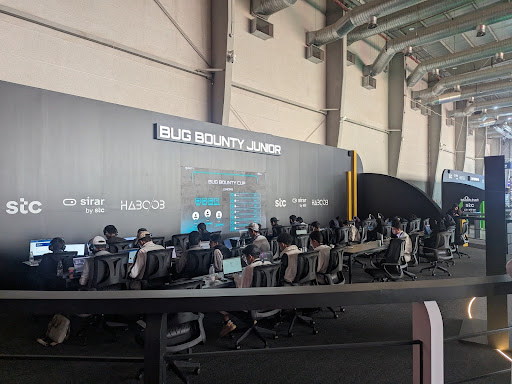
There were extensive hands-on zones designed for participants to stay all day. And people did. I’d estimate that 25-30% of attendees spent most of their time in these activity areas.
There were CTF and Bug Bounty stations. There was n00b activity. There was a medical device hacking station, a rogue cell tower, ship spoofing, payment exploitation, game cracking, and financial transaction hacking. Those areas were saturated.
True story: someone had a medical incident and was taken to the medical hacking area because it had real gurneys and privacy screens! (“Medical equipment tampering area” is probably not a place you want to wake up at, but hey…)

At many US-based conferences, including BSides, DEF CON, and RSA, audiences tend to skew heavily male. I don’t have formal numbers to cite, but the imbalance is usually visible.
At Black Hat MEA, that dynamic felt different.
Women were present across the conference. As speakers. As exhibitors. As attendees. As participants in hands-on activities. The distribution didn’t feel 50/50, but it also didn’t resemble the 90/10 split that often characterizes US events.
As stated earlier, the conference center is an hour away from the city. The conference set up transit buses. In Saudi Arabia there were separate buses for men and women. All times I used the bus service, both buses were equally full.
At the CTF events, men clustered with other men, and women clustered with other women. Both clusters had strong representation. I gave a talk on the importance of the private sector to engage with the vulnerability research community. From my vantage on stage, the audience seemed pretty close to 50/50.
I do not write this in a mean way, or even as criticism. It was simply noticeable, and fascinating if you’re not used to it.
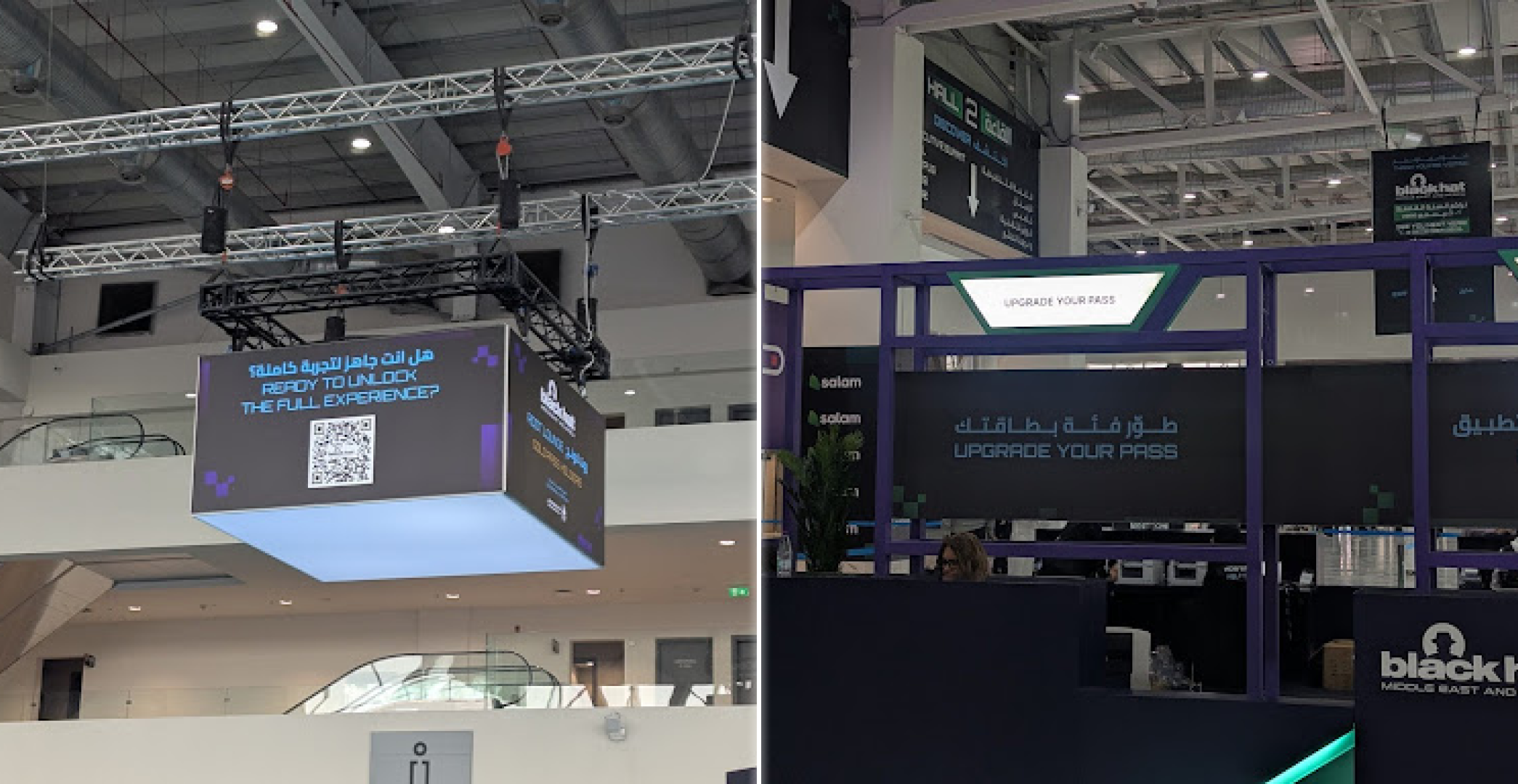
Across the GCC, status is clearly part of the sales experience. Even before arriving, airline carriers sent regular messages offering paid “enhancements”, such as VIP airport check-in. There are no frequent flyer programs, only “privilege clubs.” The Riyadh metro features dedicated first-class cars.
On-site at Black Hat, attendees were repeatedly offered badge upgrades. VIP, VVIP, and even Gold. These badges were visually distinguished and came with a special carpet-laden entrance, reserved seating in the front rows, dining areas, and car service.
Here are a few pictures from Al Taraif in the Diriya historic zone. Not pictured are @Sandip Wadje, @Aniket Bhardwaj, and @Sounil Yu, who are excellent co-tourists.

Under the advisement of @Nada Al Ghannam, @Sounil Yu and I also took the metro to Qasr Al Hokm to check out several in-station art installations.


A multi-sensory installation exploring memory and departure through sound, text, imagery, and light.
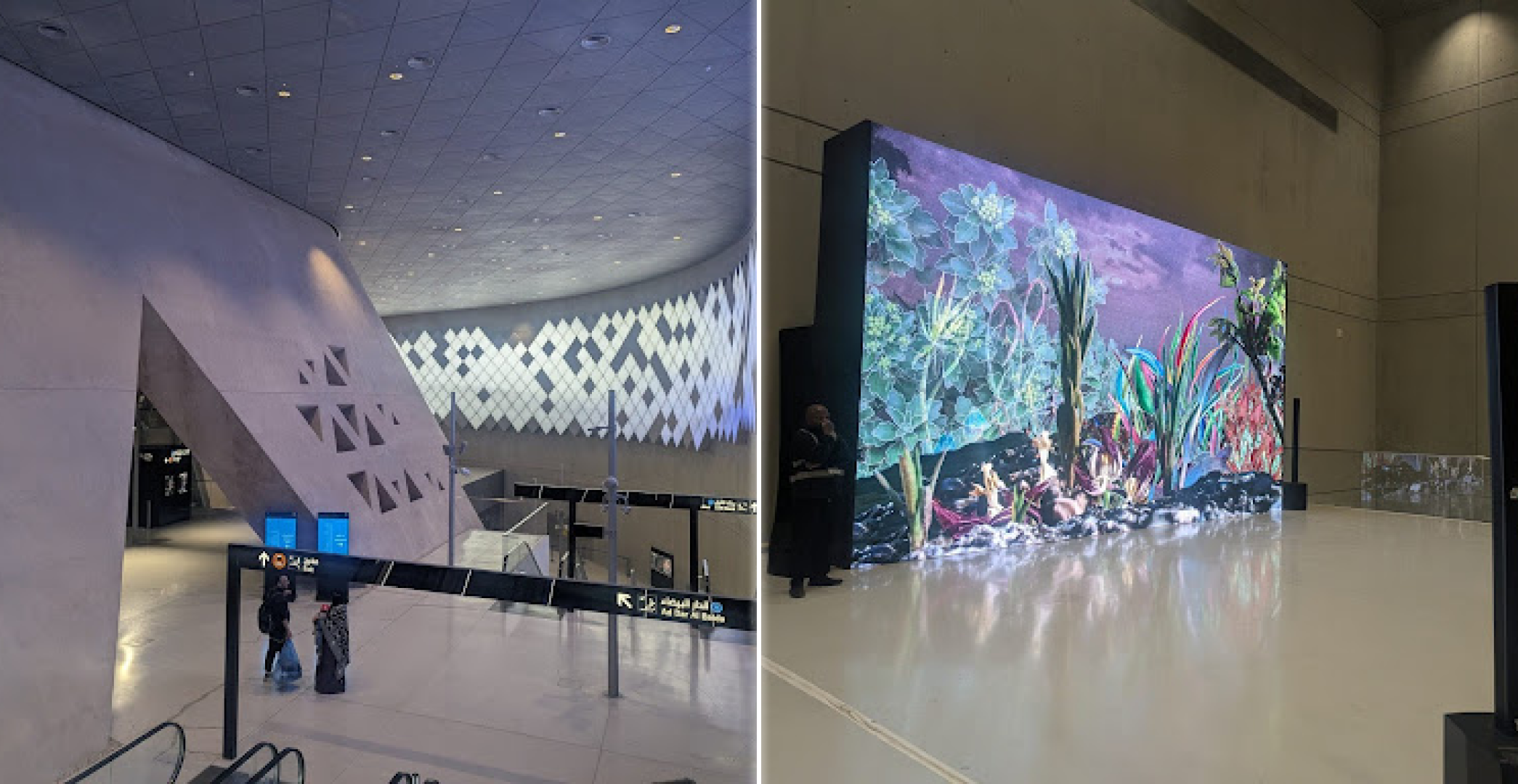
A stop-motion and digital animation installation. This exhibit was really neat. Four speakers pushed sound directionally toward the center of the room, while a poem generator printed custom poems on paper.
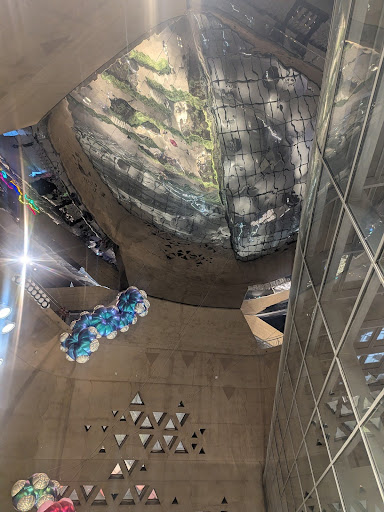
This piece had multiple shapes representing the molecular form of petroleum, covered in iridescence that gives off the same colors as oil. The mirrored ceiling is inspired from an oil drum and is above ground.

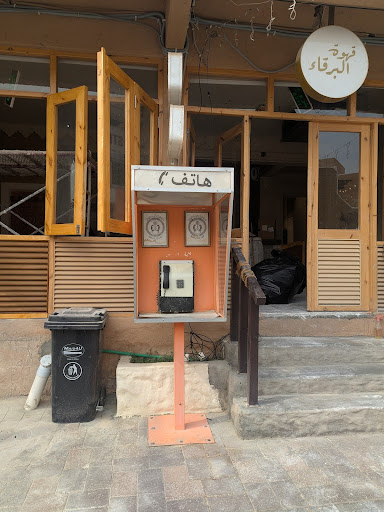
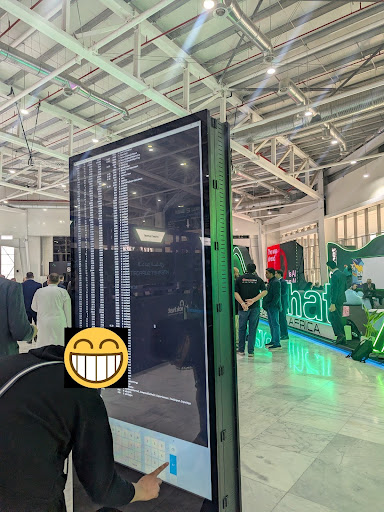
I took far more photos than I could include here. If you’re interested, feel free to get in touch. We also share more frequent updates and observations on LinkedIn.
